
With better than expected Rs 1.45 lakh crore bids coming in on the first day, the auction of 5G spectrum entered the second day on Wednesday with the opening of the fifth round. Firms run by tycoons Mukesh Ambani, Sunil Bharti Mittal and Gautam Adani as well as Vodafone Idea are participating in the e-auction to buy fifth-generation (5G) airwaves. The government received confirmed spectrum bids worth Rs 1.45 lakh crore after the completion of four rounds of spectrum bidding on the opening day on Tuesday.

Adani Data Networks said it plans to create a private 5G network for its operations. However, it acquired the spectrum in the last 5G auction alongside three telecom companies. Subsequently, it was granted a unified licence for access services, which enables it to provide telecom services in the country.
The company has made payment in compliance with Telecom Department's instructions for self assessment, Mittal said, adding that the Supreme Court had not mentioned specific amounts.

The new offer is part of its strategy to turn India to an exclusively 4G market.


In order to determine whether this would be sound strategy for them, one needs to look at two issues: One, on the alliances being built globally between telcos, on one hand, and cloud service firms, on the other, especially with the advent of 5G; and two, how their business strategies in India will blend into with such a deal.
When, recently, Bharti Airtel announced a Rs 21,000 crore rights issue, analysts pointed out that its structure was similar to that of Reliance's issue in June 2020. One similarity is that shareholders in both companies have to pay only 25 per cent of the money on application. The rest is to be paid in two tranches. In Bharti Airtel's case, it is within 36 months; in Reliance Jio's, it is within 17 months.

The Department of Telecom on Tuesday approved applications of telecom companies -- Reliance Jio, Bharti Airtel, Vodafone Idea and MTNL -- for conducting 5G trials but none of them will be using technologies of Chinese entities. The list of telecom gear makers approved for trials include Ericsson, Nokia, Samsung, C-DOT and Reliance Jio's indigenously developed technologies.
With the Adanis submitting an earnest money deposit (EMD) of just Rs 100 crore on Monday for the upcoming 5G spectrum auction, the apprehension among the rivals that the group is nursing ambitions of being an all-India mobile player has been allayed at least for now. Based on its EMD, analysts say it can buy spectrum worth just Rs 900 crore, whose use will be limited to enterprises and captive networks -- that too is likely only in a few circles where it has its infrastructure like ports, airports, and power stations. While getting all-India millimetre band spectrum of 400 MHz (which costs Rs 2,800 crore) is ruled out, it might choose circles like Gujarat and Mumbai to start with.

Vodafone Idea on Monday paid Rs 2,500 crore to DoT and promised to pay another Rs 1,000 crore before the end of the week.

AGR dues calculated by the government for 16 entities add up to Rs 1.69 lakh crore, while telcos' self-assessment place their dues at a mere Rs 37,176 crore.
Six consecutive profitable quarters after an equal number of losses - for Bharti Airtel, the turnaround has been quick. But it is not a result of higher tariffs or absence of exceptional items alone. Execution and strategy are playing a part, too. Bharti Airtel's chief executive officer Gopal Vittal summed it up in a post-result conference call last month. "We track the profit in each of our 237,500 (cell) sites.

In percentage terms, IndusInd Bank, SBI, HDFC, ICICI Bank and L&T were among the top losers. On the contrary, Bharti Airtel, Reliance, Sun Pharma, HCL Tech and Maruti Suzuki emerged as major gainers.

Adani Enterprises' proposed Rs 20,000 crore (Rs 200 billion) fundraising via fresh issue of equity shares through a public offer would be the fourth biggest by Indian companies, excluding banks and non-banking financial companies.

With telecom disruptor Reliance Jio not raising tariffs, incumbents Bharti Airtel and Vodafone Idea are focusing on the minimum monthly recharge and higher first recharge offers to ensure they retain only loyal and revenue-incremental subscribers, reports Romita Majumdar.

Vodafone-Idea is working on a multi-pronged strategy to begin its long journey to get back in the game but much hinges on how much money it can raise following the government's decision to go for equity conversion last week. Based on discussions with sources aware of the company developments and with vendors, VIL's immediate plan is to invest in increasing 4G coverage to the level of its competitors. Currently, it covers a 1 billion population with 4G while its competitors cover 1.2 billion people.

Telecom service providers (TSPs) have begun to monitor and prevent spam calls since May 1, with the help of an artificial intelligence and machine language-based system acting on the Telecom Regulatory Authority of India's (Trai) latest directive on the matter, its officials told Business Standard. Touted as the first big technological measure against the growing menace of unsolicited commercial communications, all TSPs have confirmed to Trai that they have rolled out the AI/ML tool. The filter system works on the distributed ledger technology (DLT) platform used by TSPs, and is set to go for incremental updates, rules for which will soon be released, they added.

Bharti Airtel chairman Sunil Mittal has expressed hope that the government and regulators will step in to ensure the sector remains a viable place for continued investments and asserted that the industry requires "long overdue" support to maintain its current 3+1 structure. In the latest annual report of Airtel, Mittal said as the sector's role in the economy becomes more pervasive, its challenges loom larger. Issues such as unsustainable pricing and low returns in a highly capital-intensive environment, coupled with legacy legal issues, "have extracted their toll", Mittal observed.

Following the October 24 Supreme Court order, the department of telecom estimated that the total liability of 15 telecom companies, including penalties and interest, would be Rs 1.47 lakh crore.
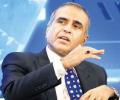
Bharti Airtel chairman Sunil Mittal on Thursday said he had reached out to Vodafone's Nick Read after bold telecom reforms were announced by the government and will also speak to RIL's Mukesh Ambani, as the telecom czar vowed to take the lead in bringing the industry together to unleash India's telecom dream. Mittal exhorted the industry to collaborate in areas such as infrastructure sharing to reduce costs but vehemently ruled out possibility of any cartelisation among players. Amid reports of its potential tie-ups with handset makers to counter Jio's upcoming ultra low-cost smartphone, Mittal said Airtel is in a state of "readiness" on an affordable smartphone "should a need arise".
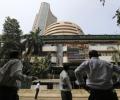
RIL became the first Indian company to hit the Rs 9.5 lakh-crore market capitalisation level. Shares of Bharti Airtel soared 7.36 per cent and Vodafone Idea rallied 34.68 per cent after both the companies announced a hike in mobile phone call and data charges from December.
Airtel had previously responded to the DoT's order by offering to pay Rs 10,000 crore by February 20 and the remaining before March 17. Airtel owes nearly Rs 35,586 crore, including licence fee and spectrum usage charge, to the government.
If Vodafone Idea shuts, a bulk of the high-paying ARPU customers will move to Airtel as Reliance Jio does not have a comprehensive postpaid offering like it, and have aggressively preferred to play in the prepaid market. The bulk of Vodafone Idea customers use 2G phones and only a few of them use data. It will be easier for Airtel to woo these customers as they can shift seamlessly to its 2G network without changing handsets or even SIM cards,
Reliance Jio's decision to acquire 700 MHz in combination with the possible use of an advanced standalone (SA) 5G network could give it an edge over its rivals, according to most analysts. The dissenters argue that the stiff price tag touching Rs 40,000 crore to grab 10 MHz of spectrum in 700 to provide coverage for its SA 5G network which offers ultra-low latency (unlike non-standalone or NSA), has a long way to go in India in terms of finding use cases that can be monetised. Globally, 700 MHz is a pivotal band which provides huge coverage, indoor penetration (especially useful in India where walls are thick) and is already considered by the European Union to be the 'pioneer band' for 5G, with 3.5 GHz and 26 GHz, both of which were auctioned in India recently.

Vodafone Idea, which reported a loss of Rs 6,439 crore in the December quarter, said it had received letters from the department of telecommunications (DoT) directing immediate payment of dues amounting to Rs 54,000 crores after the SC judgment. "The company is currently assessing the amount that it will be able to pay to DoT towards the dues calculated based on AGR, as interpreted by the Supreme Court in its order dated October 24, 2019. The company proposes to pay the amount so assessed in the next few days," it stated.

With the new entity coming in force, Bharti Airtel will lose the tag of India's biggest telecom service provider to the new entity.
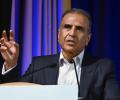
'If you are going to have only a handful of telecom players on whom the entire dream of Digital India rests, it's important they are financially sustainable.'

Vodafone Idea Ltd (VIL) CEO Ravinder Takkar did some plain speaking. In an analyst call after its quarterly results recently, Takkar said that the main stumbling block to raising fresh capital from investors is "pricing" - telecom tariffs, in other words. Nine months ago, the telecom company's board had cleared a proposal for raising Rs 25,000 crore from investors, after the promoters made it clear that they were not ready to pump in more money. But potential investors are concerned that without clarity on tariff hikes (there have been none for more than 18 months) they might just lose their money. The lack of visibility on raising tariffs has also impelled VIL to request the Department of Telecom (DoT) for a fresh reprieve by extending the two-year moratorium on paying its spectrum instalment of Rs 8,200 crore for another year till FY23.

The launch of Reliance Jio Infocomm Ltd last September, particularly the tariff war it has unleashed on its competitors, has deepened the crisis facing India's telecom sector. One offshoot of this is the major drop in earnings reported by industry leaders Bharti Airtel and Idea Cellular with each passing quarter. Aslam Hunani/Rediff.com tells the story in numbers.
These circles account for 23 per cent of Bharti's revenues and armed with additional spectrum, it will eat into rivals' share
Vodafone Idea on Wednesday said its board has approved availing the four-year spectrum payment moratorium being offered by the government as part of its relief package for the telecom sector. The other options offered in the Telecom Department's notification will be considered by the board of directors within the stipulated timeframe, it said in a regulatory filing. "...we wish to inform you that the Board of Directors of the company has approved the exercise of the option of deferment of the company's spectrum auction instalments for a period of 4 years (October 2021 to September 2025) in accordance with ...the notification dated 14 October 2021 issued by the Department of Telecommunications (DoT) to the company," it said.

Mukesh Ambani's Reliance Jio, however, continued to add wireless subscribers

Bharti Airtel, Reliance Jio, Vodafone Idea said the Railways should not be permitted to offer commercial services like Wi-fi and voice and video communication.

Sources at the department of telecommunications confirmed that Bharti Airtel has submitted application to bid for airwaves frequencies at pan-India level.

The Cabinet approved giving Bharti Airtel, Vodafone Idea Ltd and Reliance Jio an option to avail of a two-year moratorium on payments they were supposed to make in yearly installments for the spectrum bought in auctions.

All Sensex components ended in green, with Bajaj Finserv, HCL Tech, Bharti Airtel, IndusInd Bank, L&T, TCS, ONGC and ICICI Bank, Bajaj Finance and SBI gaining up to 6.64 per cent.

On the Sensex chart, Bharti Airtel was the biggest loser with nearly 3 per cent drop in its share price. It was followed by IndusInd Bank, Maruti Suzuki, HeroMoto Corp and Tata Steel.

The Department of Telecommunications (DoT) has asked Vodafone Idea (Vi) to come back to it with a business plan soon in light of its decision not to launch 5G services for now (unlike its competitors Reliance Jio and Bharti Airtel) and in view of its assessment of the possible impact of BSNL's impending launch of 4G in a few months and then 5G by August 15. "We are worried about Vi as we want to have three private players and one government player in the market. "The global trend now is to have two to three players.

The government is planning to roll out 5G testbed in early January to enable small and medium enterprises and other industry players to test their solutions on a working platform, a top Department of Telecom official said on Thursday. For the promotion of 5G indigenous technology, DoT in March 2018, had approved a multi-institute collaborative project to set up an indigenous 5G Test Bed at a total cost of Rs 224 crore. A testbed consists of a specific environment including hardware, software, operating system, and network configuration to test a product or service.

Mobile operators with the exception of Reliance Jio are in a much worse financial condition than expected earlier. The combined borrowing of the four incumbent operators - Bharti Airtel, Vodafone Idea, Bharat Sanchar Nigam (BSNL), and Mahanagar Telephone Nigam (MTNL) - reached an all-time high of Rs 3.85 trillion at the end of March this year. The companies' combined debt was up 22.4 per cent year-on-year last financial year against 8.3 per cent growth in their borrowing in the previous year. As a result, the incumbent operators' debt-equity ratio shot up to an unsustainably high level of 6.83X at the end of March this year from 2.3X at the end of March 2020. This was largely due to big losses reported by all these companies last financial year. The four incumbent operators racked up combined net losses of Rs 70,000 crore in FY21.
 © 2026 Rediff.com - Advertise with us - Disclaimer - Privacy Policy - Sitemap - Feedback - About us - Terms of use - Grievances